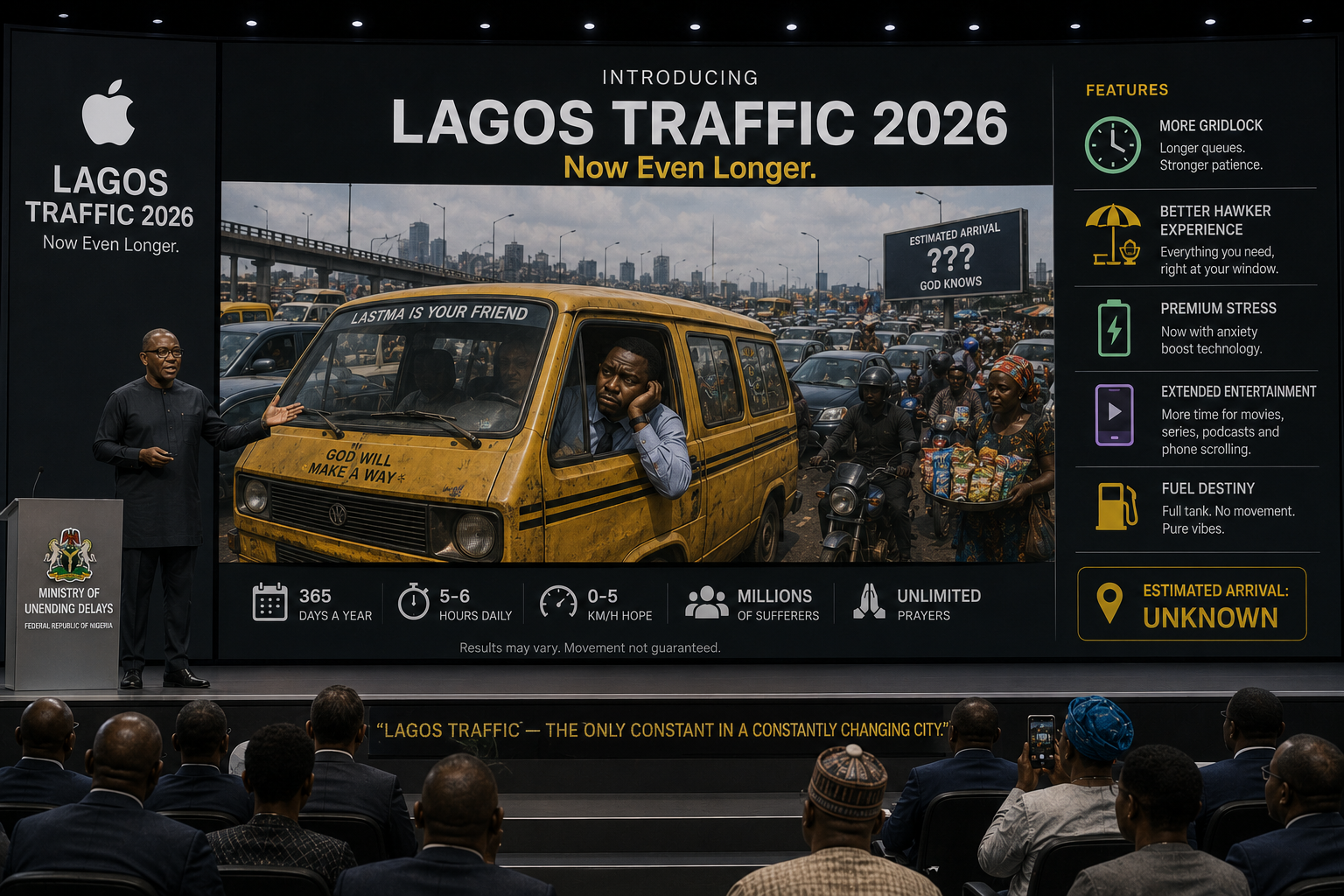
Uber Reportedly Redirects Investment To Countries Where Cars Can Move After Entering Traffic
After years of fuel prices doing acrobatics, Lagos traffic defeating GPS, and passengers demanding Lekki-to-Ikeja comfort at “my guy abeg” rates, Uber may have finally discovered Nigeria is less a market than a practical exam in suffering.

Uber says it has left Nigeria because it reviewed its business priorities and decided to redirect its investment elsewhere. Very respectable. Very corporate. Very “we appreciate your patronage and wish you the best in your future endeavours.” But I have another theory. I think Uber simply got tired.
Not tired of Nigerians. That would be impossible. Nigerians are lovable. I mean tired of Nigeria.
Because there is a particular point where a multinational company can no longer tell whether it is running a transportation business or participating in a national endurance competition.
So, in the spirit of The National Cake, here are 10 reasons I think Uber may have finally looked at Nigeria, sighed deeply and said, “Guys, let us leave these people.”
1. The price of fuel started behaving like a cryptocurrency
Uber may have entered Nigeria thinking fuel was an operating expense. Nigeria eventually turned fuel into a personality.
One day it is one price. The next day it has increased. Then transportation fares increase. Then passengers complain. Then drivers complain. Then everybody complains about everybody.
At some point, even the algorithm must have started asking, “How much is petrol today?”
2. Nigerians want a luxury experience at ‘my guy, abeg’ price
This country has perfected the art of demanding premium service while negotiating like we are buying tomatoes at Mile 12.
We want a clean car, working air conditioner, polite driver, safe driving, and a smooth journey.
But if the app says N8,500, suddenly somebody remembers that “my guy has a car.”
3. Surge pricing became a national enemy
Uber introduced surge pricing because demand increases during busy periods.
Nigerians interpreted it as personal persecution.
Rain falls: surge, Concert finishes: surge, Traffic becomes terrible: surge, Everybody leaves church at the same time: surge.
Before long, Nigerians were looking at surge pricing with the same suspicion reserved for a suspicious POS agent.
4. Lagos traffic may have finally broken the algorithm
Imagine building a global transportation technology company and then arriving in Lagos, where Google Maps itself sometimes looks confused.
The driver is moving. The car is moving. The map says the car is moving. But after 45 minutes, everybody is still beside the same filling station.
5. Drivers wanted money. Passengers wanted miracles
Keep reading
More like this
- Opinion
The Phyna-Ashmusy Boxing Saga Is Proof That In This Industry, Everybody's One Bad Deal Away From Becoming A Content Creator's Villain Origin Story
In Nigeria’s content economy, even a boxing deal can collapse without anybody throwing a punch, as goodwill, Instagram Stories, and old grudges enter the ring to prove contracts are temporary but screenshots are forever.
Nyesom Dwala


Reader takes
0 comments