
The Psychological Effects of Hearing "I Am On My Way" When You Are Really Not on Your Way
Researchers say Nigerians have finally confirmed what WhatsApp has been warning us for years: “I’m on my way” is not a location, it is a mood. In many cases, it simply means the person has seen your call and chosen peace over accuracy.
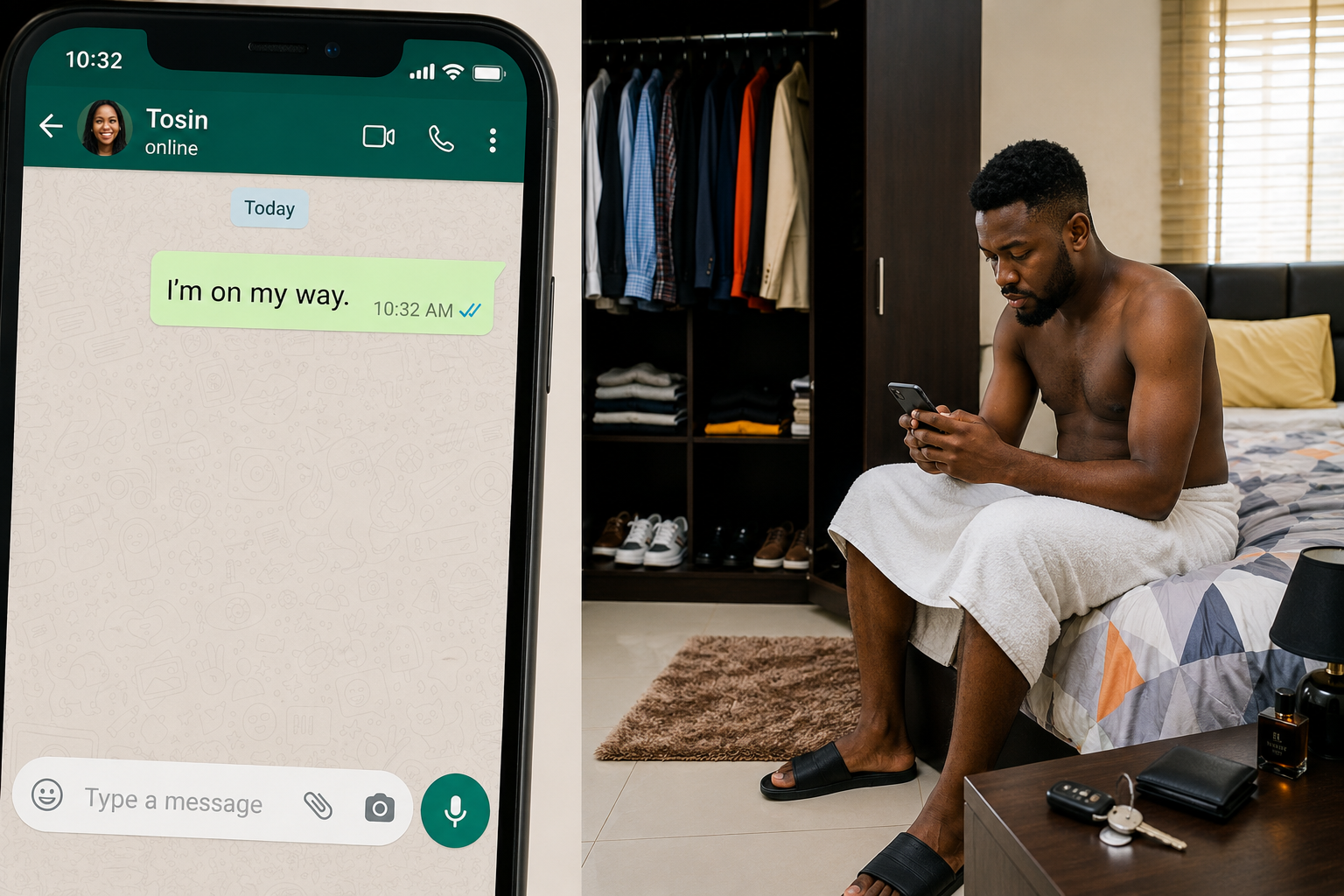
Researchers have finally confirmed what Nigerians have suspected for decades: the phrase "I'm on my way" has evolved from a statement of location into a state of mind.
According to a groundbreaking study conducted entirely in WhatsApp chats and missed calls, the average Nigerian says "I'm on my way" approximately 27 minutes before locating their car keys.
Experts say the phrase has become so culturally significant that it no longer refers to physical movement. Instead, it simply means, "I have acknowledged your existence and would appreciate if you stopped calling."
Psychologists warn that repeated exposure to the phrase has produced severe trust issues among Nigerians. Victims reportedly begin asking increasingly specific questions.
Where exactly are you?
I've left the house.
Which house?
My house.
Have you entered the car?
I'm about to.
About to since when?
The condition worsens when the suspect sends a voice note with obvious bathroom echoes while insisting they're "already close."
One Lagos resident revealed he has stopped believing anyone until they send a live selfie beside a recognizable bus stop.
Technology has done little to solve the crisis. Location sharing is routinely rejected with excuses ranging from "my GPS is bad" to "network is disturbing my movement."
Meanwhile, relationship counsellors report that "I'm on my way" has become the leading cause of avoidable arguments, surpassed only by "I'm almost there," a phrase scientists now estimate covers any distance between fifty metres and fifty kilometres.
As for Nigerians, they have adapted brilliantly.
Today, whenever someone says, "I'm on my way," everyone silently translates it to, "I've started thinking about leaving."
And somehow, communication continues.
Keep reading
More like this
- Opinion
Uber Reportedly Redirects Investment To Countries Where Cars Can Move After Entering Traffic
After years of fuel prices doing acrobatics, Lagos traffic defeating GPS, and passengers demanding Lekki-to-Ikeja comfort at “my guy abeg” rates, Uber may have finally discovered Nigeria is less a market than a practical exam in suffering.
Nyesom Dwala


Reader takes
0 comments